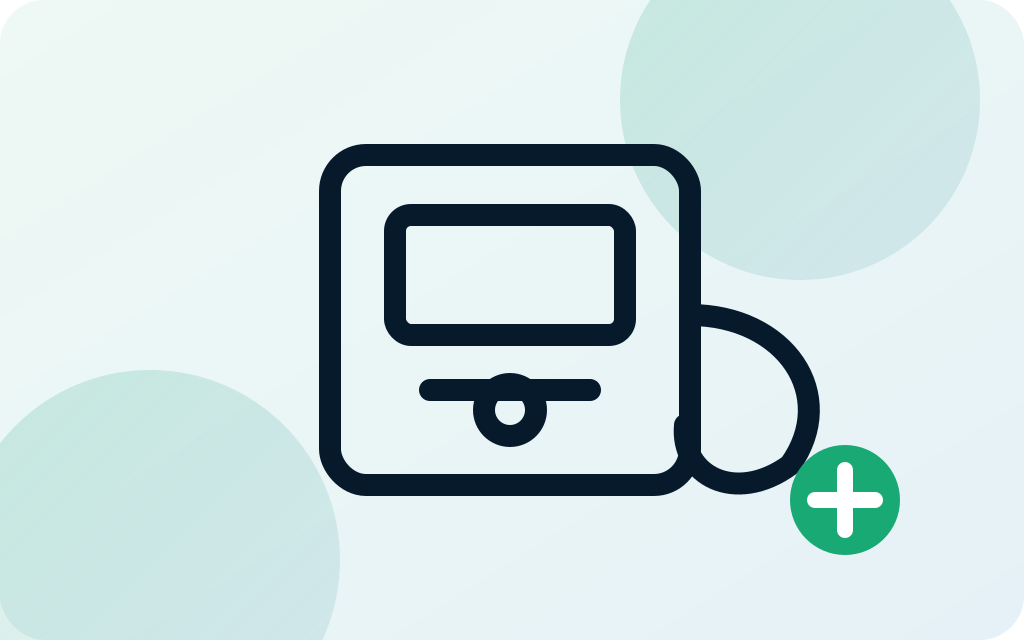
Digital BP Monitor
A home blood-pressure monitor can make it easier to record readings between clinical visits. Upper-arm monitors are commonly used for routine home measurements when recommended by a healthcare professional.
Final price depends on brand/model, rental duration, specification, delivery area and current availability.
When this equipment may be requested.
Important points before selecting a model.
Choose the correct cuff size for the user's upper arm.
Use a validated upper-arm monitor when possible.
Measure after sitting quietly and follow a consistent technique.
Take the device to a clinic periodically if the treating team wants to compare readings.
Common options.
- ✓ Automatic upper-arm options
- ✓ Digital systolic/diastolic display
- ✓ Pulse display
- ✓ Memory features on selected models
What to confirm.
- Type
- Automatic upper arm
- Measurements
- Systolic, diastolic and pulse
- Cuff
- Size varies by model
- Memory
- Available on selected models
What happens after you submit a requirement.
Frequently asked questions.
Which is better: wrist or upper-arm BP monitor?
Upper-arm monitors are commonly preferred for routine home monitoring when an appropriate cuff size can be used.
Why do my readings change each time?
Blood pressure varies naturally and can be affected by posture, recent activity, stress, caffeine, talking and measurement technique.
How often should I check blood pressure?
Follow the schedule recommended by the treating healthcare professional.
Can a home BP monitor diagnose hypertension?
Diagnosis should be made by a qualified healthcare professional using appropriate measurements and clinical context.
Check rental or purchase availability.
Share your city, locality and PIN code. In the note, mention rental or purchase, expected duration and any model/specification requirement.